Documented networks
Paris, Prague, Berlin, and the rest of the map.
London opened the working telegraph-office tube. Paris built the largest public pneumatique. Berlin’s Rohrpost outlived the western half of the city split. Prague still has the pipes. Encyclopedias disagree on some mileages and closing years.
Paris
1866–1984, the long pneumatique.
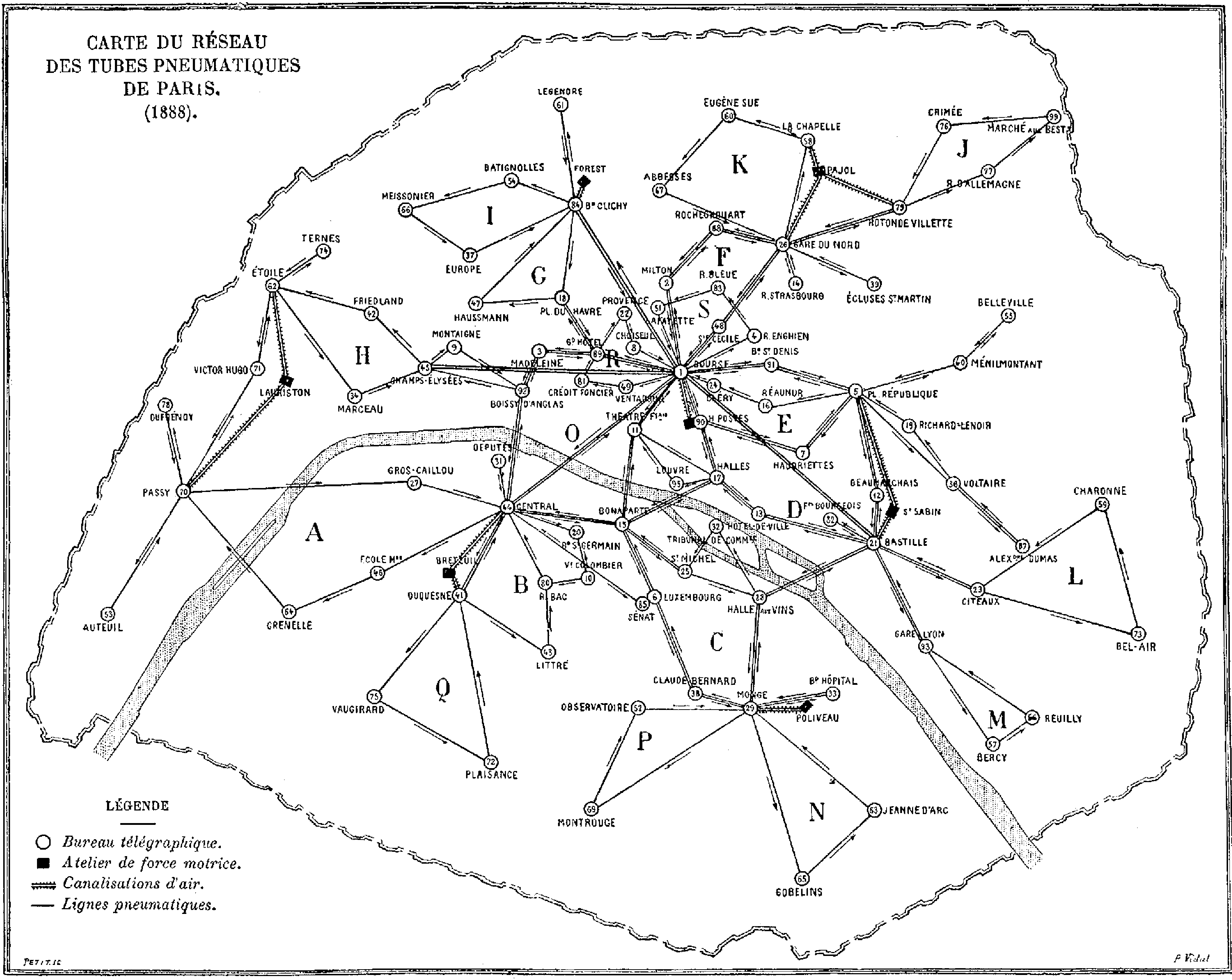
The dedicated English Wikipedia article Paris pneumatic post dates the service 1866–1984. It was built because the city’s electric telegraph had become overloaded and messages were falling back onto the road. Tubes in the sewers bypassed street traffic. The first line, December 1866, ran between the Central Télégraphique in Rue Feydeau and Le Grand Hotel on the Boulevard des Capucines — 1.05 kilometres — in a steel tube of 65 millimetres diameter, buried one metre down.
The network was taken into public ownership in 1879 under the Ministry of Posts and Telegraphs and opened to the public. Originally steam-powered, the pumps were modernised to electricity from 1927. The same article gives the greatest extent as 1934: 427 kilometres of pipes and 130 offices. Message volume peaked in 1945 at 30 million. Budget cuts after 1945 starved maintenance. The network closed in 1984.
The general Pneumatic tube article on Wikipedia gives Paris as “until 1984, 467 kilometres in total length from 1934.” That is a 40-kilometre disagreement with the dedicated Paris article’s 427 km. Cabinet magazine has used 450 km / twelve million objects at height. The National Postal Museum’s object-spotlight essay, writing from Washington, says pneumatic mail “survived in Paris until 1983.” Dedicated Paris histories date the public service to 1984; 1983 is an NPM passing clause.
- First experimental line: Dec 1866, 1.05 km, 65 mm (Wikipedia: Paris pneumatic post).
- Public: 1879, P&T.
- Greatest extent 1934: 427 km / 130 offices (dedicated article) or 467 km (general tube article).
- Peak traffic 1945: 30 million messages (dedicated article).
- Closed 1984 (dedicated article; NPM spotlight: 1983).
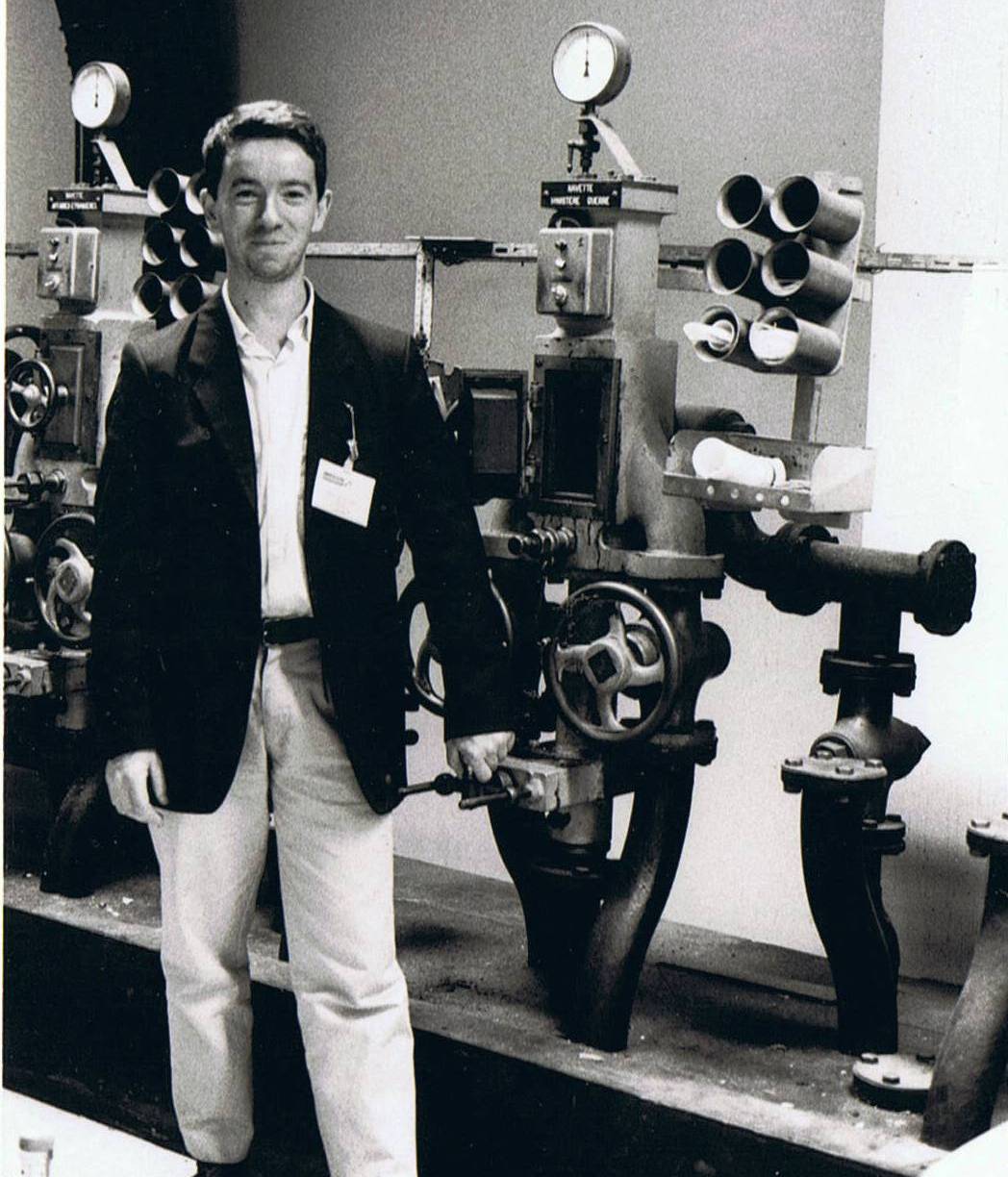
A ministerial/official parallel network existed alongside the public one; Ferri’s 1987 photograph of a still-working Fortin-Hermann terminal at Paris-Central is that remnant, not proof the public service ran past 1984.
Prague
The last preserved municipal system — not a running one.
Prague pneumatic post (Pražská potrubní pošta) is, in the wording of its English Wikipedia article, “the world’s last preserved municipal pneumatic post system.” Underground metal tubes under the wider centre total about 55 km. Public service began 4 March 1889. A first lane had been built in 1887 for internal postal use, from the main post office on Jindřišská to the bureau at Malé náměstí. Prague was the fifth city after London, Vienna, Berlin, and Paris.
The system served government, banks, and the media until the August 2002 European floods rendered it inoperative. It later passed from Telefónica O2 Czech Republic to businessman Zdeněk Dražil, who announced repair and tourist-reopening plans. As of 2017 the Wikipedia article still recorded it closed. Later Czech reporting (Novinky, 2021, quoting Postal Museum curator Martin Jahoda) describes it as maintained in an operable state but not used.
Jahoda’s operating figures — 420,000 pouches a year carrying 1.1 million telegrams; Jindřišská to Libeň 7.5 km in 12 minutes; to the Castle 8 minutes — come from that curator interview. Czech Wikipedia states transport speed “up to 10 metres per second.”
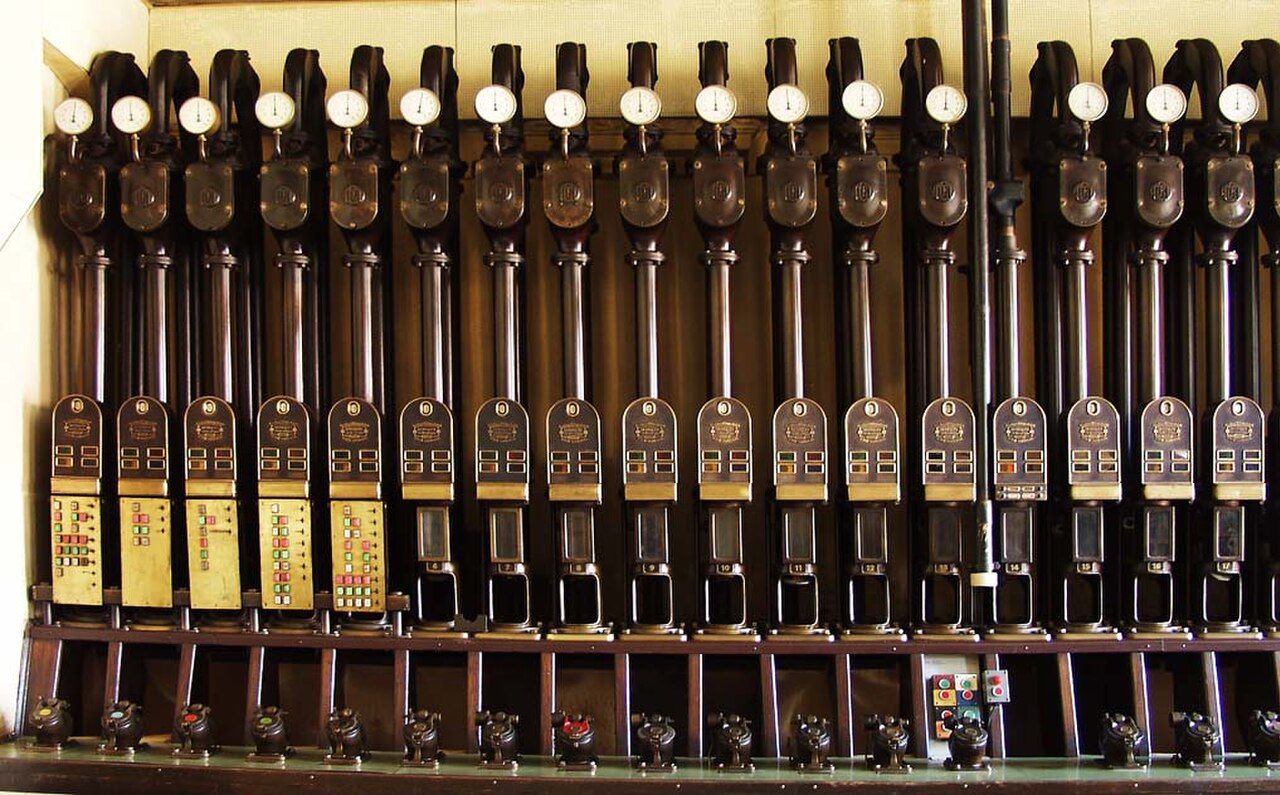
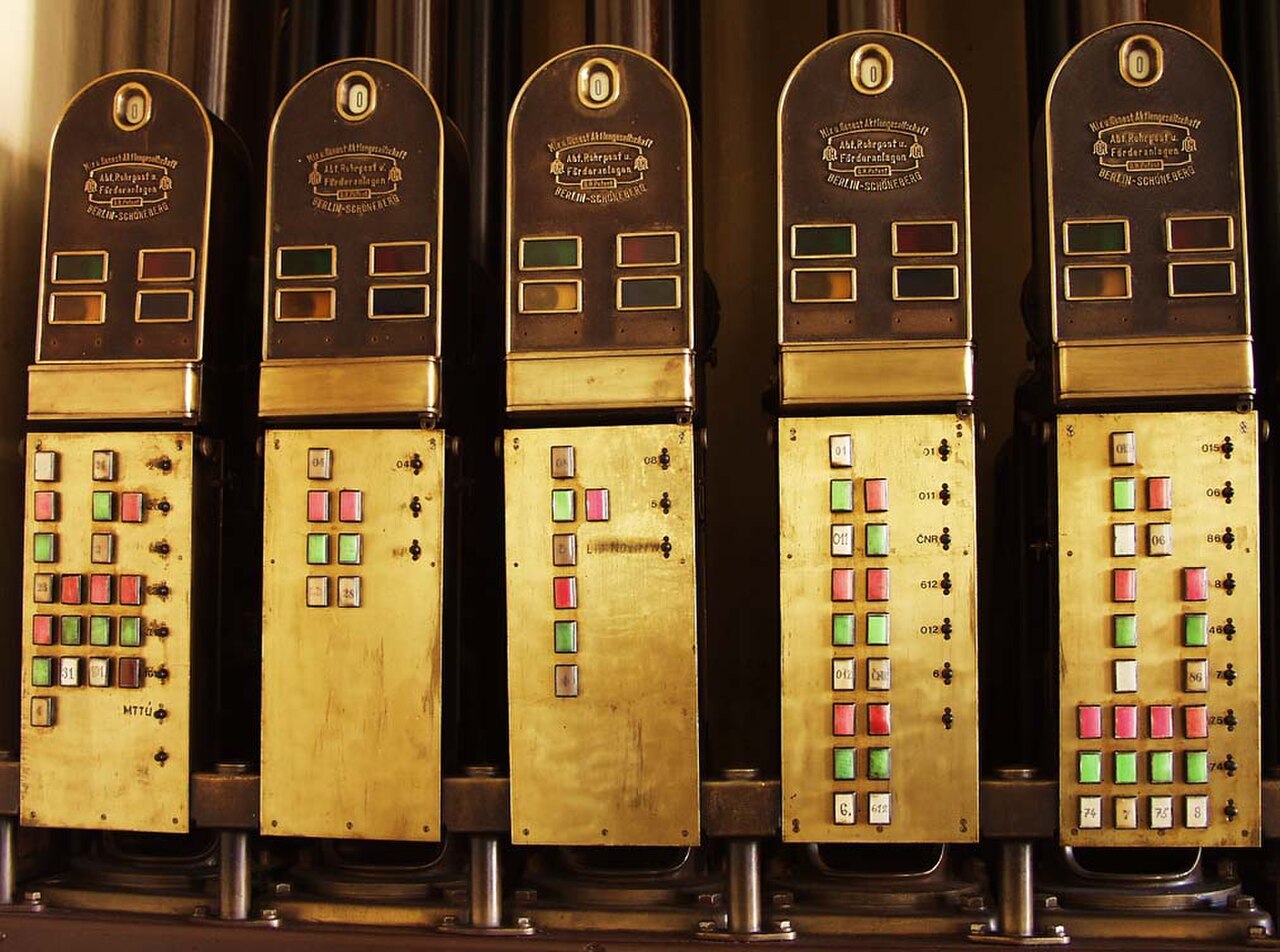
Berlin and London
The Prussian grid, and the 220-yard original.
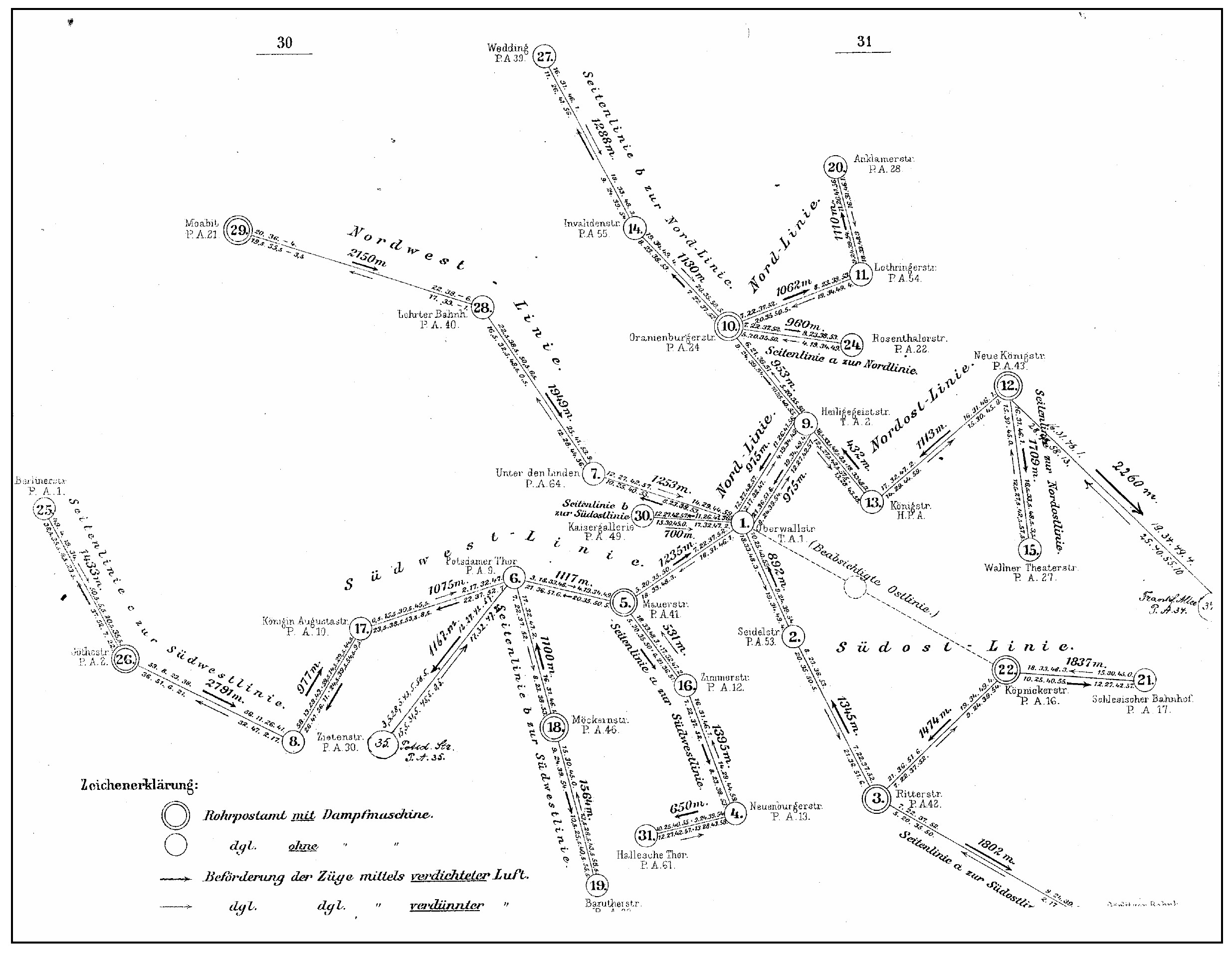
Encyclopedias date Berlin’s Rohrpost from 1865 (telegraph-office / stock-exchange tubes) to 1976, with a public city service often dated 1 December 1876. Wikipedia’s pneumatic-tube list gives 400 kilometres at peak in 1940. A technical-history page at the Museum of Retrotechnology explicitly flags a discrepancy: some sources put the maximum around 254 km. WELT (2024) describes an initial 15 connected post offices, later “up to 94,” and notes that the East Berlin remnant lasted until 1976. Most physical remains were ripped out in post-1990 construction; the Museum für Kommunikation and Berliner Unterwelten hold what is left.
London is the usual origin: Josiah Latimer Clark, 1853, about 220 yards between the London Stock Exchange and the Electric Telegraph Company in Lothbury. By 1880, Kieve’s telegraph history (as cited on Wikipedia) records over 21 miles of tube in London. The London Pneumatic Despatch Company (1860s) was a different, larger-bore parcels railway — famous for blowing directors through the Holborn–Euston tube — not the letter-tube network.
Wikipedia’s city list also names Dublin (1871), Munich, Hamburg, Rome, Naples, Milan, Marseille (closed 29 February 1964 on the Retrotechnology page), Algiers (1910), Rio de Janeiro, Buenos Aires, Melbourne, and several Japanese and Swiss cities. National Postal Museum captions state Philadelphia 1893 as the first U.S. postal installation; Boston, Chicago, and St. Louis complete the six-city, 56-mile 1915 sentence.