Trucks · telephones · telex · fax · rent
Why the street won.
Pneumatic post did not fail because the physics stopped working. It failed because the city moved and the pipes did not, because a truck could be sent to a new address, and because a telephone did not need a 65-millimetre bore. The National Postal Museum’s sentence is the plot: while post offices and businesses moved with relative ease, the underground pneumatic system did not.
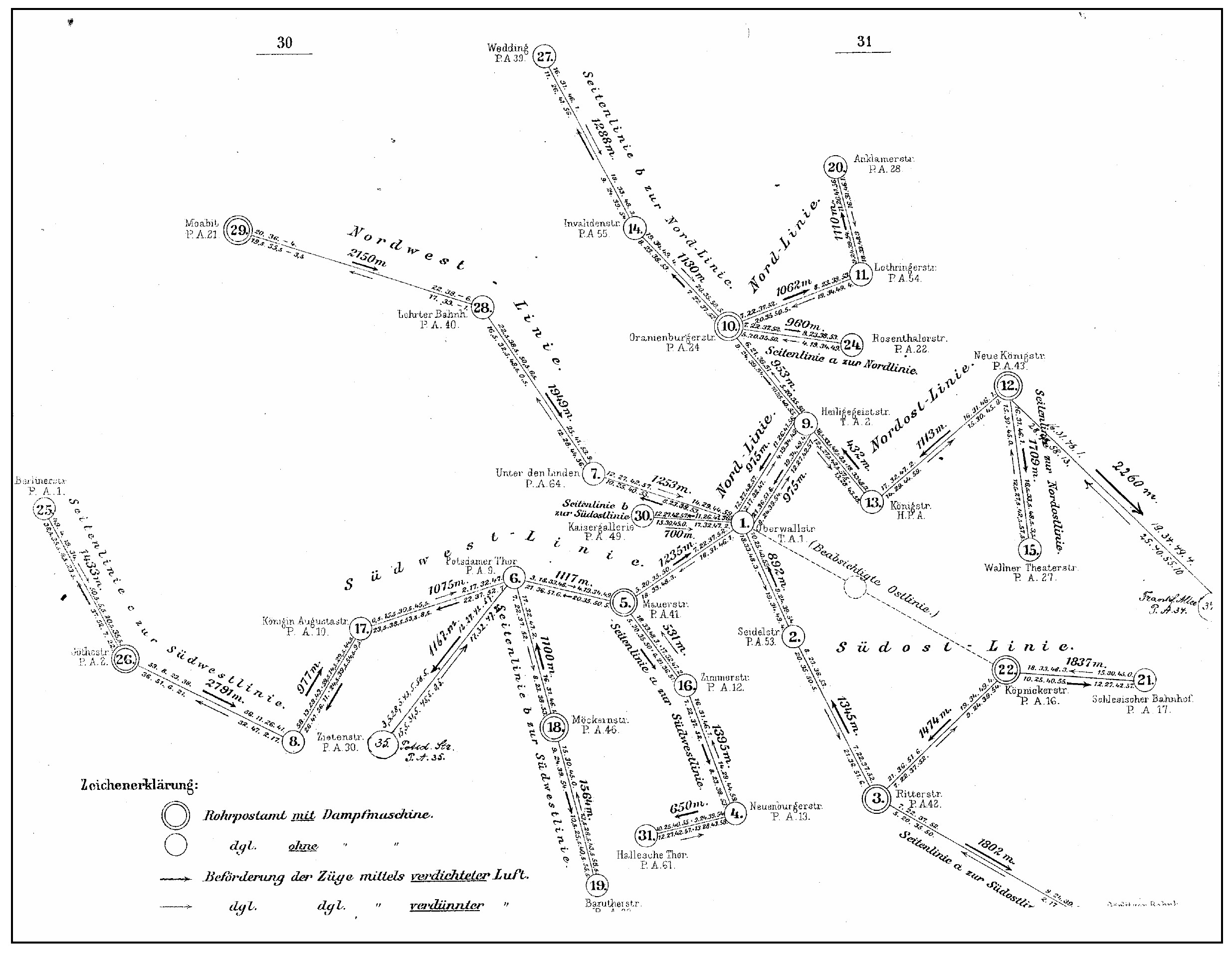
Every documented closing speech is a variation on three themes: cost of a private contract, inflexible infrastructure, and a faster substitute that did not require digging. The substitutes were not all the same. In the United States the substitute was the motor truck. In Europe it was the telephone, then the teleprinter, then the fax. Paris, which outlasted New York by three decades, died of electronics, not of the Winton wagon.
The National Postal Museum is blunt about U.S. economics. Contracts for building and maintaining the lines were expensive. World War I funding pressure produced a suspension. After restoration, mail volumes kept growing and the network could not be replumbed as fast as clerks could be reassigned. Kane notes that automobiles carried mail between railway stations and post offices even faster than the tubes. Smithsonian Magazine quotes the 31 December 1953 suspension language: “obsolete, unnecessary and excessively expensive.”
NPM’s object-spotlight essay adds a sorting argument that is easy to forget: cylinder loads could be dispatched and sorted at intervals, beating a streetcar’s bulk dump. That advantage held until the truck could go anywhere the streetcar tracks — and the tubes — could not.
Closing dates, as published
Not a single funeral.
Each network ended on its own substitute. There is no single closing year for the technology.
| City | End, as sourced | Reason given by that source |
|---|---|---|
| U.S. six-city set | WWI suspension; Boston 1950; New York 31 Dec 1953 (NPM) | Cost, motor vehicles, immovable pipes, growing volume |
| Vienna | 2 April 1956 (Wien Geschichte Wiki; Austria Post: 1956) | War damage; telephony and teleprinters; unprofitability |
| Berlin | 1976 in the East (Wikipedia / WELT) | Disuse; later physical destruction in rebuilds |
| Paris (public) | 1984 (dedicated histories); NPM passing clause 1983 | Telephone, telex, fax; starved maintenance after 1945 |
| Marseille | 29 February 1964 (Retrotechnology page) | Not expanded here |
| Prague | Inoperative after August 2002 floods (Wikipedia; Czech reporting) | Water in the pipes — a physical end, not a tariff end |
Telegraph offices invented the tubes as a last mile for messages that had already travelled as Morse. Once the telephone reached desks, that last mile was optional. Austria Post names telephony and teleprinters in the same breath as war damage. Paris histories name fax. The NPM, writing about New York, barely needs the telephone: the truck was enough.
The NYPL’s finding aid on the New York Mail and Newspaper Transportation Company records a political subplot: the 1951 contract had run to 1960; cancellation in 1953 was backed by Republicans in Congress who criticised Hubert Humphrey’s earlier sponsorship of the renewal. Cost was the public language. Contracts were the machinery.
What did not kill the idea was the physics. Building-scale systems — hospitals, stores, banks — kept being installed after 1953, after 1956, after 1984. They never depended on a municipal right-of-way. That remnant industry is not a claim that the city post “lives on at your drive-through.” See hospital remnant.
A useful test: if the carrier holds a blood tube with an RFID chip, you are not looking at 1897. If it holds six hundred letters and lives in a Smithsonian case, you are.